You don’t have a trust problem. You have a leadership problem.
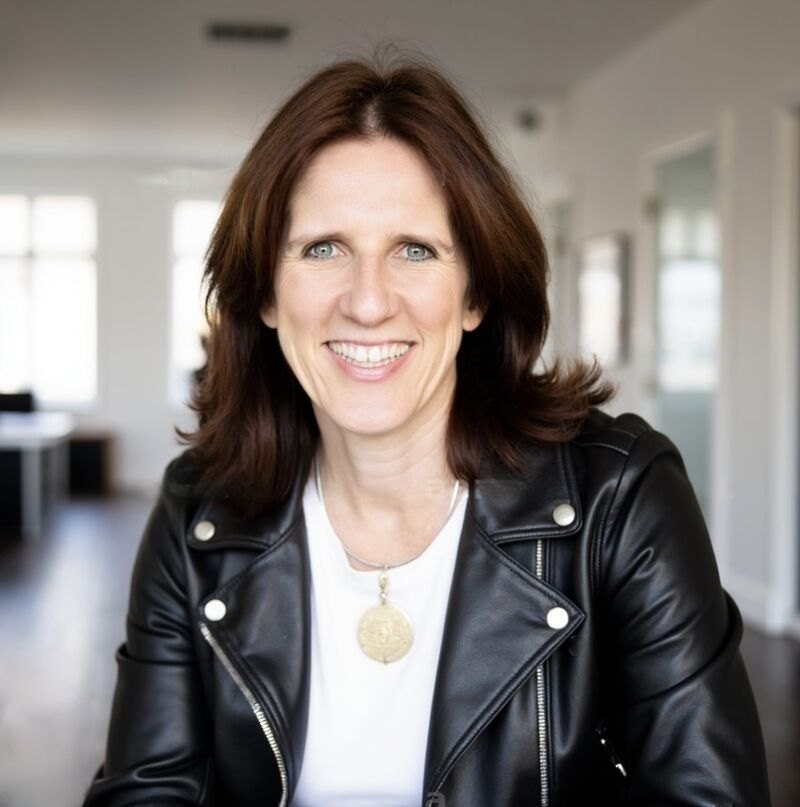
First published in The Leadership Mirror, Claudia’s newsletter on LinkedIn. Read the original.
What if the problem is you?
Better conditions. Better decisions. Better leadership.
That's the conclusion. But getting there requires leaders to look somewhere they often don't: at themselves.
Your team goes quiet in the meeting that matters most. Commitments get made and quietly abandoned. Every real decision ends up on your desk, again. People nod in the room and resist in the hallway.
Leaders usually call this a communication problem, a trust problem, an accountability problem, something to fix with a new norm, a new cadence, a values poster in the break room. But those are often symptoms, not the source. It's a leadership problem the team is carrying, one that looks like a people problem because they're the ones living it. It's actually a conditions problem, and it traces back to you.
01 · The Real Diagnosis
Across more than 6,000 executive coaching conversations, I’ve watched leaders try to fix team behavior with new meeting rules, scorecards, and offsites. Too often, the changes don’t last because they address the behavior, not what is causing it.
A team doesn't create its climate alone. Leaders disproportionately shape it, whether they mean to or not. Every unspoken assumption, every commitment quietly let slide, every truth that gets softened before it reaches the leader's ears, all of it was shaped somewhere upstream.
That's the premise behind the TACT™ Framework: Trust, Accountability, Clarity, Truth. Four conditions that, when present, make a team's performance multiply. When absent, no amount of coaching the team directly will fix the source.
Trust. The confidence that people are safe, respected, and that others have their best interests in mind.
Accountability. Commitments are explicit, owned, and followed through, not implied and hoped for.
Clarity. People know what matters, who decides, and what is expected of them.
Truth. Reality gets surfaced early, especially when it is uncomfortable to say out loud.
Here's what leaders can miss when they read that list: they assume TACT describes the team. It doesn't. It describes the climate the leader has already built.
02 · The Leadership Mirror
These conditions don't only show up in the team's climate. They show up first, earlier and quieter, in how the leader personally leads. The same four conditions show up at every level, what changes is just where you're looking: at yourself, at the climate you create, or at how your team behaves.
A VP at a Fortune 500 organization I coached moved faster than almost anyone in that organization. Decisive, structured, she hit every deadline and could restructure a plan before her team had finished reading the brief. Her 360 told a different story. You won't hear it in what she said. You'll hear it in four sentences.
| TACT | What she said | What she did |
|---|---|---|
| Trust | “I trust my team.” | She stayed deep in work she had already delegated. |
| Accountability | “I want them to take ownership.” | She stepped in and solved problems for them. |
| Clarity | “They know what they need to do.” | She moved to the next priority before they had absorbed the last one. |
| Truth | “I want people to challenge me.” | She asked questions, then answered them before people had time to think. |
And then the shift:
| TACT | What she changed |
|---|---|
| Trust | She gave people time to think. |
| Accountability | She stopped solving what they owned. |
| Clarity | She slowed down before introducing the next priority. |
| Truth | She asked for their recommendation before giving hers. |
The result: her team stopped waiting for direction and started bringing recommendations.
You cannot demand from your team what you are not modeling yourself. The team is not the source. It’s the readout.
03 · The Leader Has to Go First
TACT shows you the conditions your leadership has created. A.T.T.U.N.E. shows you how to change them. If you want your team to navigate tension, make decisions, and deliver, the work starts with you. Before the team changes, the leader has to change how they lead.
Awareness. Knowing yourself before you lead others.
Tone. Communicating with intention, not reaction.
Trust. Doing what you said you would do, with the other person's interest genuinely in mind.
Understanding. Seeking to understand before demanding to be understood.
Naming. Saying what matters out loud, and holding yourself accountable to it first.
Equilibrium. Staying grounded and humble when the pressure is highest.
That's not a personality trait. It's a leadership discipline, and it matters most under pressure.
It's easier to introduce a new accountability process than to recognize that your own behavior may be creating the problem. Your tone changes under pressure. You step in more quickly. You listen less. And over time, your team learns to adjust around you.
Better Conditions. Better Decisions. Better Leadership.
Every leader wants a team that speaks up, owns outcomes, and moves through conflict instead of around it. Far fewer are willing to ask the harder question first: what have I been modeling that made the opposite true? That question is uncomfortable. It's also where leadership begins.
Leadership doesn't scale because a team tries harder. It scales when the conditions a leader creates finally match the outcomes a leader expects. Your team is not broken. Your team is accurate. The climate is telling you exactly who has been leading it.
Better conditions. Better decisions. Better leadership.