Your Team's Behavior Isn't a Mystery. It's a Mirror.
What If Your Team Is Behaving Exactly as You Trained It To?
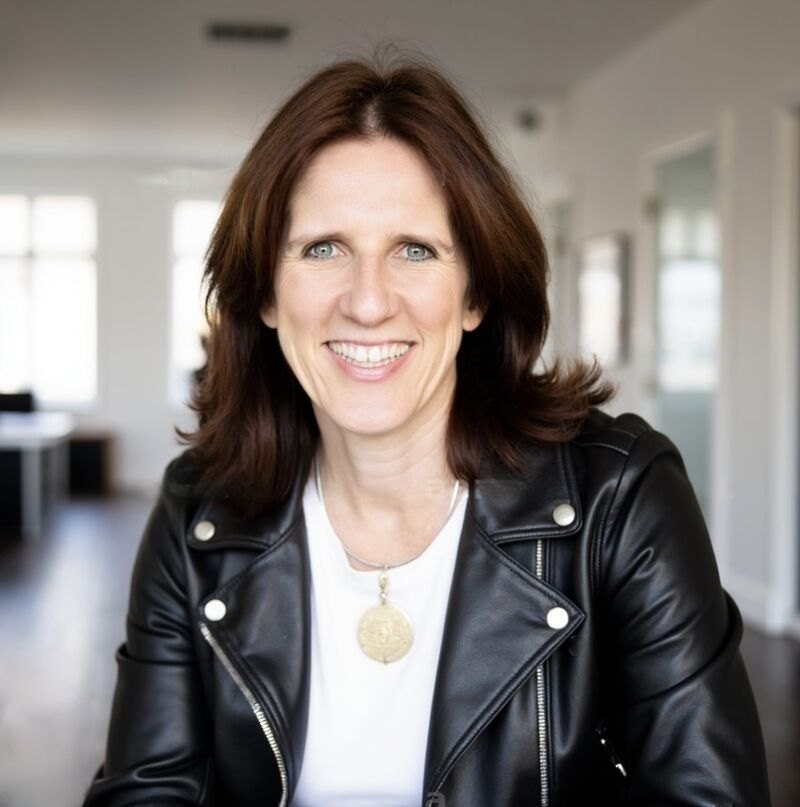
First published in The Leadership Mirror, Claudia’s newsletter on LinkedIn. Read the original.
In 2021, I Thought Coaching Was the Future of Leadership
In 2021, I wrote an article about the future of leadership. At the time, I believed the biggest shift was moving from command-and-control leadership to a coaching mindset. I still believe that matters.
But after more than 6,000 executive coaching sessions with senior leaders around the world, I've come to a different conclusion. Looking back, I wasn't wrong. I was simply looking at the seed instead of the soil.
Coaching plants seeds. But seeds alone don't determine what grows.
The soil does.
Leadership is the work of creating the conditions where trust, curiosity, accountability, and performance can take root and thrive. Every leader wants a better harvest: better decisions, stronger relationships, higher performance. Yet too often, we focus on the harvest instead of the soil.
Leaders don't change behavior directly. They cultivate the conditions that shape it. Behavior is the harvest. Conditions are the soil.
In a world where AI can answer almost any question, leadership is becoming less about having better answers and more about creating the conditions where people contribute their best thinking.
When a leader tells me, "My team isn't stepping up," I rarely ask, "How do we motivate them?" I ask, "What conditions are they responding to?"
That single question changes almost every coaching conversation.
The Shift Isn't Coaching. It's Conditions.
For the past decade, coaching has become one of leadership's defining capabilities. Rightly so. Leaders who coach develop stronger people than leaders who simply direct. But coaching alone does not create high-performing teams.
A leader can ask insightful questions while unintentionally creating conditions where people withhold ideas, avoid difficult conversations, and defer instead of deciding.
The quality of leadership is ultimately determined less by the questions leaders ask than by the conditions they create.
A leader can complete every coaching program available and still reward caution, compliance, and self-protection. Coaching is not the destination. It is one expression of something deeper.
The leaders who consistently build exceptional teams don't simply coach better. They create better conditions. Across more than 6,000 coaching conversations, five conditions appear again and again. They determine whether leadership succeeds or fails.
Five Conditions Every Leader Creates
1. Attention
People become what leaders repeatedly pay attention to. For parents, children don't do what you asked them to do, they copy your behavior. The same is true at work.
If every meeting revolves around urgency, people optimize for speed. If every discussion revolves around blame, people optimize for self-protection. If leaders always jump in with the answer, people stop bringing their own thinking. If every discussion ends with the highest-ranking person's opinion, people stop challenging ideas.
If leaders consistently recognize learning, collaboration, and thoughtful decisions, those behaviors become the norm. Culture follows attention.
If someone shadowed your calendar for the next two weeks, what would they conclude you value most?
Your calendar reveals your culture long before your values statement does.
2. Pressure
I've watched thoughtful, emotionally intelligent leaders become noticeably less curious within minutes of walking into a high-pressure board meeting. Nothing about their values changed. Their access to those values did.
Under stress, attention narrows. Listening becomes problem solving. Curiosity gives way to certainty. The gap between intention and impact grows precisely when leadership matters most.
Who do you become under pressure? Who does your team experience?
Those are not always the same person.
3. Trust
Trust is rarely built during off-sites or inspirational speeches. It is built through thousands of ordinary interactions: admitting mistakes, following through, listening without immediately solving.
Patrick Lencioni describes vulnerability-based trust as the willingness to acknowledge mistakes, weaknesses, failures, and the need for help. Across thousands of coaching conversations, those ordinary moments determine whether a team innovates or protects itself.
When was the last time your team saw you genuinely not know the answer?
People may trust your competence. But do they trust your humanity?
4. Clarity
Most leaders think they've achieved clarity when everyone leaves the meeting nodding. I think clarity begins after the meeting ends. It's revealed in the hundreds of decisions people make when the leader isn't there.
Clarity exists when people consistently make decisions that align with the organization's priorities, without needing to check back with the leader. That's when strategy becomes execution.
Could every person on your team tell me the three most important priorities without asking you?
If not, you don't have a communication problem. You have a clarity problem.
5. Environment
When a team struggles, leaders often respond with more accountability: more meetings, more feedback. Sometimes those interventions help. More often, they treat symptoms rather than causes.
Across thousands of executive coaching conversations, one pattern repeats. People respond to the conditions around them.
If you replaced everyone on your team tomorrow, how long before the same problems returned?
When leaders tell me, "My team needs more accountability," I usually ask, "What have you made easy?" People rarely resist accountability. They respond to the conditions surrounding it.
What This Looks Like in Practice
A CEO once told me, "I don't know why people stopped challenging me." I asked, "When was the last time someone disagreed with you and you became genuinely curious instead of defensive?"
He sat in silence. His intentions hadn't changed. The conditions around him had. People had learned that disagreement carried a cost. They adapted, exactly as the environment had taught them to.
Another executive told me, "My team isn't strategic enough." I asked, "How often do they bring you recommendations that you immediately improve?" He smiled. "Almost every meeting."
His team wasn't avoiding strategic thinking. They were adapting to the conditions he had created.
Leadership Begins With Awareness
One widely cited study by Jack Zenger and Joseph Folkman compared how 3,761 executives rated their own coaching effectiveness with how their colleagues rated them.
Twenty-four percent significantly overestimated their effectiveness.
That finding has stayed with me for years, not because leaders lack good intentions, but because our experience of ourselves often differs from the experience others have of us.
Leadership doesn't begin with influence. It begins with awareness. Because you cannot intentionally create conditions you cannot first see.
Why I Built the A.T.T.U.N.E.™ Framework
This observation eventually became the foundation of the A.T.T.U.N.E.™ Framework I now use with executive teams. It works across three connected layers, rooted in the same order they take hold in practice.
Layer 1 is how I lead myself. Layer 2, the Interaction Zone™, is the set of conditions I create through how I show up with others. Layer 3 is how the team operates once those conditions take hold. Most coaching develops only one layer at a time, but the framework exists because real change requires all three to move together.
Most coaching lives almost entirely in one layer. Executive coaching often develops Layer 1: leaders become more self-aware, more emotionally regulated. That work matters. But if nothing changes in how that leader interacts with colleagues, direct reports, or peers, the self-awareness stays private. No one else experiences it.
Team development often focuses on Layer 3. An off-site creates alignment. Everyone leaves energized. Then the same leader walks back into the same habits: interrupting, avoiding difficult conversations, defaulting to certainty under pressure. Within weeks, the alignment fades. Nothing changed in Layer 2.
Layer 2 is where I see the least coaching happen. Yet it is the layer that determines whether the other two connect.
During coaching, I rarely ask, "What should you do?" Instead I ask: What happened inside you just before you interrupted? What were you trying to protect? What story were you telling yourself? What would curiosity have sounded like in that moment?
Leadership rarely changes during strategy off-sites. It changes in moments measured in seconds. Layer 1 without Layer 2 produces a more self-aware leader who hasn't changed anyone else's experience. Layer 3 without Layer 2 produces a team that performs well in the room and reverts the moment the room ends.
Skip the middle layer, and the other two rarely hold.
A New Leadership Identity
Five years ago, I thought the biggest leadership shift was becoming a better coach. Today I believe the bigger shift is becoming a condition creator. Coaches ask better questions. Condition creators build environments where better questions naturally emerge.
The future belongs to leaders who create more trust, more truth, more accountability, more capacity. Not because they control people. Because they shape the conditions people respond to.
A Final Thought
I'll leave you with the same question I often ask senior leaders.
If your team behaved exactly as your leadership conditions encourage them to behave, would you be proud of the culture you've created?
Because leaders rarely get the team they hope for. They usually get the conditions they repeatedly create.
Leaders don't build high-performing teams. They build environments where high performance becomes far more likely.